

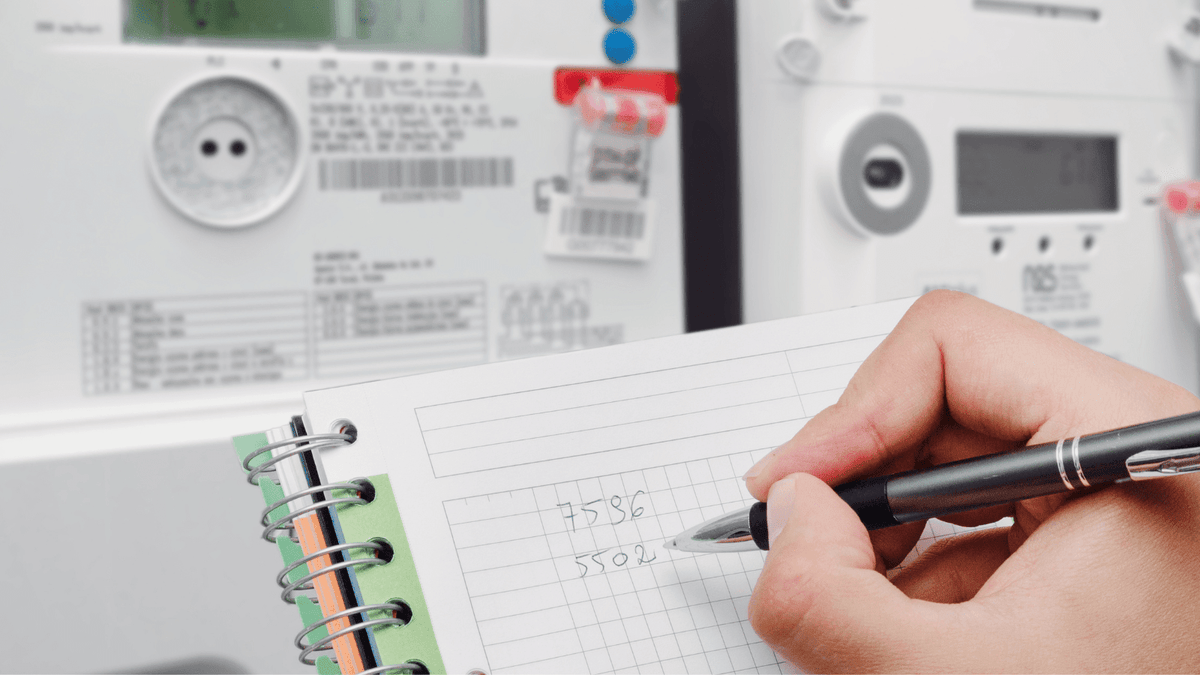
How to find the correct meter reading – whether analog, digital or smart
Want to read your electricity meter but unsure how to do it with your device? No problem! In this blog post, we'll explain step-by-step how to correctly read your current meter reading – whether you're using a classic Ferraris meter, a modern metering device (digital meter), or a smart metering system.
Why is reading the electricity meter so important?
An accurately recorded meter reading is crucial for:
- an exact electricity bill
- the correct annual statement
- a smooth change of electricity provider
- one's own control over electricity consumption
An incorrectly entered reading can lead to problems with your network provider – or to unnecessary costs. Especially with self-meter reading, every digit counts! In any case, regular meter readings are worthwhile to avoid unexpected additional charges.
Preparation: How to ensure successful meter reading the first time
Before you start reading:
- Find the electricity meter – usually in the meter cabinet in the basement, hallway or utility room.
- Have your equipment ready – a flashlight or smartphone can help in poor lighting conditions.
- Note the date and time – important for follow-up questions and traceability.
- Check the meter number – make sure you are reading the correct meter – especially if there are multiple residential units.
What numbers do I need to read on the electricity meter?
Only note the digits before the decimal point or before a colored line. These indicate the reading in kilowatt-hours (kWh). You don't need the decimal places. Some devices with a counter may display additional information.
A common mistake is reading the wrong display. Therefore, make sure you note the actual electricity consumption and not the amount fed into the grid (e.g., with PV systems). Some devices switch displays automatically – in this case, wait until the value labeled 1.8.0 appears.
Here's how to correctly read different types of meters
Ferraris counter (mechanical with rotating disc)
The Ferraris meter is one of the so-called three-phase meters, which used to be standard in many households.
Features:
- Black case
- Visible turntable
- Digit roll with mostly red decimal places
Here's how to read it: Only note the numbers before the decimal point; the decimal place is ignored. If the meter reads 12345.6, you note 12345 kilowatt hours.

Modern metering equipment (digital electricity meters)
Digital electricity meters, often also referred to as electronic electricity meters or digital electricity meters, are the current standard in many households.
Features:
- Display with numeric display
- Control button for switching between displays
- Unit “kWh” visible
Here's how to read it: Press the button on the device until the consumption is displayed. Note the displayed kilowatt-hour figure. If your meter differentiates between peak (high tariff) and off-peak (low tariff), you must read and write down both values separately.

Smart metering systems
Smart meters are networked digital meters with automatic consumption transmission.
Features:
- Changing display with measured values
- Connection to a communication module (often via app or web portal)
- Display 1.8.0 = Consumption, 2.8.0 = Feed-in (e.g., for PV system)
Here's how to read it: For 1.8.0, enter only the digits before the decimal point; this is the consumption. For 2.8.0, enter only the digits before the decimal point; this is the feed-in.
When does a smart meter make sense?
A smart meter is particularly worthwhile if you want to analyze your electricity consumption in detail or track the amount of electricity fed into the grid from a photovoltaic system. It also offers clear advantages with dynamic tariffs or if you simply want more transparency in your household. In such cases, remote reading enables precise billing and shows you your consumption almost in real time – without manual meter reading.
Comparison at a glance:

Do you want to learn more about the differences between Ferraris meters, modern metering devices, and smart meters?
Then take a look at our detailed comparison of meter types .
power reader: Live data directly to your smartphone
Do you want to conveniently track your electricity consumption in real time on your smartphone? The electricity meter makes exactly that possible – without any complicated installation.
Whether you have a modern metering device or a smart metering system, the electricity reader automatically reads all released values. All you need is a power outlet and Wi-Fi near your meter box. Once integrated, the electricity reader delivers all the values released by your digital meter clearly and directly to your smartphone.

Installation & Costs: What you should know about new meters
- Installation is carried out by the responsible metering point operator.
- Modern metering equipment: approx. €20/year
- Smart meter: up to €100/year (depending on consumption)
- Calibration is carried out regularly by the manufacturer or an independent testing laboratory.
Tip : When installing, pay attention to the correct location, such as proximity to the power line, and choose suitable adapters if necessary, such as the 32A CEE mounting for larger consumers.
Another reason for replacing your old meter could be a new photovoltaic system. In this case, a smart system is often a prerequisite for accurately recording the amount of electricity fed into the grid.

Other frequently asked questions
What is the difference between a Ferraris meter, a modern metering device, and a smart meter?
The Ferraris meter is mechanical and displays consumption via a rotating disc. Modern meters are digital, display consumption electronically, but cannot transmit data. A smart meter is also digital, transmits data automatically, and thus enables remote reading in real time.
How does remote data reading work?
The device sends the data to the metering point operator via an encrypted connection. You no longer need to read anything manually.
Can I install my meter myself?
Generally not. The installation is handled by the responsible metering point operator. In exceptional cases (e.g., for special industrial projects), a specialist may be called in.
What should be considered when changing the electricity meter?
Note down the last reading and the meter number, take a photo and keep the data safe.
What role does the manufacturer play?
Depending on the manufacturer, the display may vary slightly. It's important that you know how to switch between the different displays and which values are relevant.
What is the function of a current transformer?
A current transformer converts high currents into measurable values – frequently used in industry or in PV systems for the precise measurement of current flow.
Conclusion: Understanding and correctly using electricity meters
Accurately reading your electricity meter lays the foundation for transparent billing and a more conscious approach to energy use. Whether analog or digital, a glance at the meter helps you better assess your consumption and identify potential savings.
It's especially convenient with the electricity meter : It delivers real-time consumption data directly to your smartphone – for full control and fewer surprises on your next bill.
❗️ If you have any questions or need support, please contact us by email ( info@energieleser.de ).


Leave a comment
This site is protected by hCaptcha and the hCaptcha Privacy Policy and Terms of Service apply.