


Modern metering device, digital electricity meter or smart meter – what is the difference?
Electricity meters are essential components of every household. They record your electricity consumption, enable billing with your energy supplier, and help you save electricity. Digitalization has significantly changed the way electricity is measured – and now offers you many new possibilities.
There are three types of counters to choose from:
- The classic Ferraris counter
- The modern metering device (digital electricity meter)
- The intelligent metering system – the smart meter
In this blog article you will learn what distinguishes these devices, how they work, how you can read them, what costs are involved and when installation is mandatory.
Currently, over 23 million electromechanical meters (Ferraris meters) are still in operation in Germany. These are contrasted by approximately 21 million modern metering devices and only about 568,000 smart metering systems – according to figures from Statista (2023). This shows that the nationwide rollout of smart meters is still in its early stages.
What is a Ferraris counter – and why is it still common?
The Ferraris meter is a mechanical electricity meter that works on a simple principle: A magnetically driven disc rotates depending on the electricity consumed. The meter reading is taken manually via a counter.
Advantages:
- Simple assembly
- No electricity consumption
- Robust and durable
Disadvantages:
- Manual reading only
- No storage or digital processing of data
- No smart home compatibility
What can a modern metering device (digital electricity meter) do?
The modern metering device, also known as a digital electricity meter, is the successor to the Ferraris meter. It displays the current meter reading on a digital screen and also stores time series data. This gives you a precise overview of your energy consumption – for example, on a daily or weekly basis. Feed-in of solar power is also recorded.
Advantages:
- Precise consumption display
- Overview of consumption patterns
- basis for the Smart Meter
- The amount of solar power fed back into the grid can be read directly at the meter.
Disadvantages:
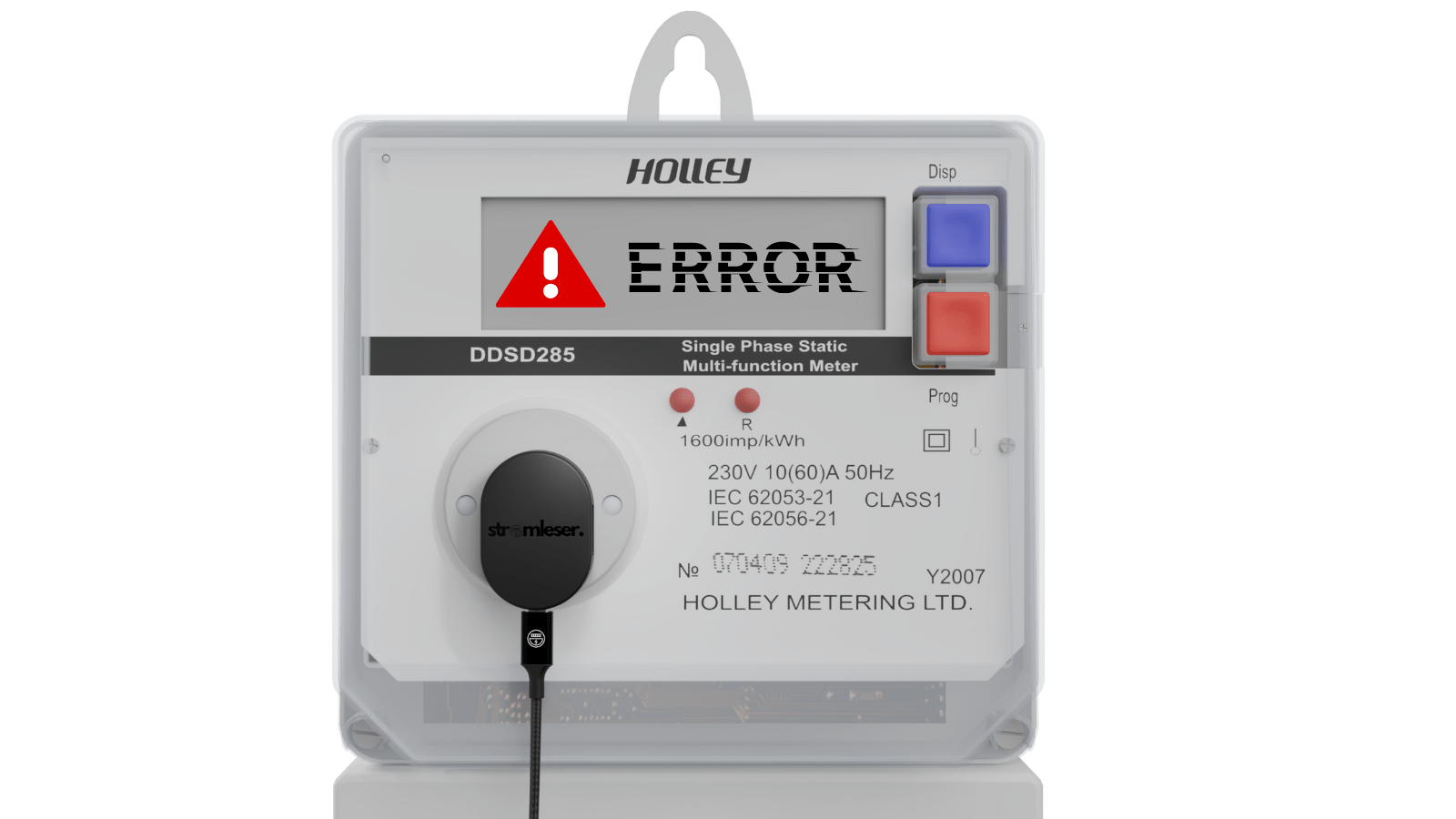
- No automatic data transfer without an additional device
- No direct access via app or cloud
💡 Tip: Use the electricity reader You can still track your electricity consumption in real time on your smartphone – without any additional gateway.
How does a smart meter work – and what are the benefits for you?
Legally speaking, a smart meter consists of two components:
- a modern measuring device (i.e., a digital electricity meter)
- and a certified smart meter gateway, a communication unit between the meter and the metering point operator
Only this combination forms what is known as an intelligent metering system (iMSys). This system automatically transmits your electricity consumption data to the metering point operator at regular intervals, using encryption. Remote reading eliminates the need for manual meter reading appointments – data transmission is automated. It also meets high standards for data protection and IT security.

Advantages of a smart metering system:
- Remote reading without a scheduled reading appointment
- Live data access via app or web portal
- Integration into smart home systems is possible.
- Basis for dynamic electricity tariffs
Disadvantages:
- Higher costs compared to simple digital meters
- Some users express privacy concerns.
Electricity meters comparison
| feature | Ferraris counter (analog) | Modern measuring device (digital) | Smart metering system |
|---|---|---|---|
| function | Mechanical function, based on a rotating disc | Electronic function with digital measurement | Combined function of meter and gateway |
| Advertisement | Mechanical counter | Digital display with unit in kWh | Digital display, online access possible depending on the provider. |
| Data collection | Current status only | Time series stored locally | Time series stored + automatic transfer |
| Reading | Manually by user or meter reading service | Manually by user (display button) | Automatic – no manual reading necessary |
| communication | ❌ None | ❌ No additional equipment required | ✅ Via gateway with secure data transmission via power line |
| Smart home compatible | ❌ Not possible | ❌ Only via add-on module | ✅ Smart home integration possible |
| Deployment today | Obsolete, will be replaced | Standard on new meters | Mandatory in certain cases, e.g., for PV feed-in. |
| Additional measurements | ❌ Not available | ✅ Display of consumption & energy feed-in | ✅ Measurement of active power, peak loads & regenerative braking |
| technology | Without sensors | Optional current sensors (e.g., current transformers) depending on the version | Integrated current transformer for precise real-time data |
| Meter reading | Low self-consumption through mechanical measurement | Low self-consumption (~44 kWh/year) | Higher self-consumption (~88 kWh/year incl. gateway) |
| Disposal | Only available in limited quantities. | Available in large quantities | Not yet available everywhere, but growing |
| Manufacturer / Supplier | Various, hardly produced today | Many manufacturers on the market | Few certified manufacturers due to legal requirements |
| Further information | Simple construction without additional technology | They also deliver daily, weekly and monthly consumption data. | Additional grid-related information such as voltage, frequency |
| Suitable for billing | Current invoice only, no comparison data | Annual trend for more precise calculation | Basis for dynamic tariffs & automated invoices |
Electricity meter: Costs at a glance
Prices vary significantly depending on the design and scope of services.
- Ferraris counters: free of charge (if still available, but are no longer being installed)
- Modern metering equipment: approx. €20/year
- Smart meter: approx. €60–100/year
These costs cover the metering service, the operation of the equipment, and, if applicable, remote reading. For smart meters, there may also be one-time installation costs.

Installation and legal obligations
The installation of modern meters is regulated by the Metering Point Operation Act. This regulation regarding equipment is based on nationwide specifications and is being implemented gradually. All old meters must be replaced by 2032 at the latest. Switching to a smart metering system is mandatory if:
- your annual consumption is over 6,000 kWh
- you operate a solar power system or a combined heat and power plant
- you use a controllable consumption device (e.g. heat pump)
The responsible metering point operator will contact you in good time regarding the installation.

What needs to be considered when installing a new electricity meter?
Before installation, the metering point operator will check whether your meter cabinet is suitable. Your meter cabinet will often require a little more space . In some cases, minor structural modifications are necessary for the installation of digital meters. Installation is carried out by qualified professionals and usually takes less than an hour. Depending on the manufacturer, the electricity meter may vary slightly in features and functionality. You will then receive a handover protocol with the current meter reading.
How to read your electricity meter
Ferraris counter:
- Read the meter reading on the mechanical counter
- Only note down the first five digits (before the decimal point).
Digital measuring device:
- Activate display (press button)
- Read the consumption at “1.8.0”
Smart Meter:
- Data is transmitted automatically
- You can view your consumption at any time in the app.
📌 Ensure all devices are properly calibrated – this is the only way to guarantee your billing is legally sound. Regular meter readings will help you keep track of your electricity costs.
You can find more information on this topic on our blog page:
How to read your electricity meter correctly – explained step by step
How does the electricity meter affect your electricity bill?
Your electricity meter forms the basis for your electricity bill. Regularly checking the meter reading and comparing it to your own usage can quickly reveal high consumption. By accurately comparing your electricity consumption and usage, you can better understand fluctuations and take targeted countermeasures. This allows you to specifically reduce energy-intensive appliances and lower your monthly costs.
Special cases: Submeters & industrial electricity meters
Submeter
Used in apartment buildings, shared flats, or outbuildings. They record partial consumption, e.g., for heating systems or communal lighting.
Industrial electricity meter
In industry, devices with extended measurement functions (e.g., voltage, frequency, power) are often used. For households, a digital meter or smart meter is usually sufficient.
Frequently asked questions about electricity meters
Do I need to have my old electricity meter replaced?
Yes – by 2032 at the latest. In some cases earlier, for example in the case of high electricity consumption or a solar power system.
What happens to my old device?
It is removed, disposed of, and documented during installation.
Are new devices calibrated?
Yes – all electricity meters must be calibrated by law.
Do I need a smart meter?
Not necessarily. But it offers many advantages – especially with high consumption.
Is there any funding or advice available?
Some municipalities offer free energy consulting. Subsidies are usually tied to larger energy systems.
The future of electricity meters: Where is the development headed?
In the future, electricity meters will become even smarter: They will become part of smart grids, automatically control household appliances, and help with the targeted charging of electric cars or storage systems. The smart meter will thus become the control center for your energy usage.
Save electricity with digital consumption data: How to use your meter cleverly
A modern electricity meter – whether a standard metering device or a smart meter – provides you with much more than just a meter reading. Regular analysis of your consumption data can help you actively save electricity. Because: Knowing when and where energy consumption is particularly high allows you to react accordingly.
Typical energy guzzlers in the home, such as old refrigerators, water heaters, or devices left in standby mode, are identified more quickly. Digital meters allow you to analyze your electricity consumption by time of day or usage patterns. Combined with the electricity meter and its corresponding app, you can even view your data live on your smartphone – and react immediately to unusual consumption patterns.

Many households underestimate how much electricity is wasted unnecessarily – for example, through forgotten lights, poorly adjusted heating systems, or inefficient appliances. Regularly checking the current meter reading and comparing it to previous months or the previous year provides transparency.
Tip: In many cities, consumer advice centers or energy suppliers offer free consultations where your consumption is analyzed and potential savings are identified. Your electricity meter thus becomes a tool for conscious, sustainable energy use – and helps you specifically to reduce your costs.
Conclusion: Your electricity meter makes the difference
Whether it's Ferraris, digital technology, or smart technology – your electricity meter helps you save energy and reduce costs. With a modern metering device or a smart meter, you gain more control, a better overview, and greater future-proofing.
Make your consumption visible – and permanently lower your electricity costs.
❗️ If you have any questions or need support, please contact us by email ( info@energieleser.de ).


Leave a comment
This site is protected by hCaptcha and the hCaptcha Privacy Policy and Terms of Service apply.